HomeBlogLine Art vs Sketch: Which Drawing Style is Right for Your Art?

Line Art vs Sketch: Which Drawing Style is Right for Your Art?

January 15, 20268 min readGuide

In the world of drawing and digital art, few distinctions are as important yet as often confused as the difference between line art and sketch. Both are fundamental approaches to creating visual art, yet they serve different purposes, follow different principles, and produce distinctly different results. Whether you're a beginner exploring your artistic style or an experienced artist looking to expand your techniques, understanding these two styles is essential to choosing the right approach for your project.

The confusion between line art and sketch is understandable—both involve drawing with lines, both can be monochromatic, and both are used as foundational techniques in many artistic practices. However, they differ significantly in their purpose, execution, and visual characteristics. In this comprehensive guide, we'll explore what makes each style unique, when to use each one, and how modern tools like PhotoGrid.space can help you convert photos into either style.

What is Line Art?

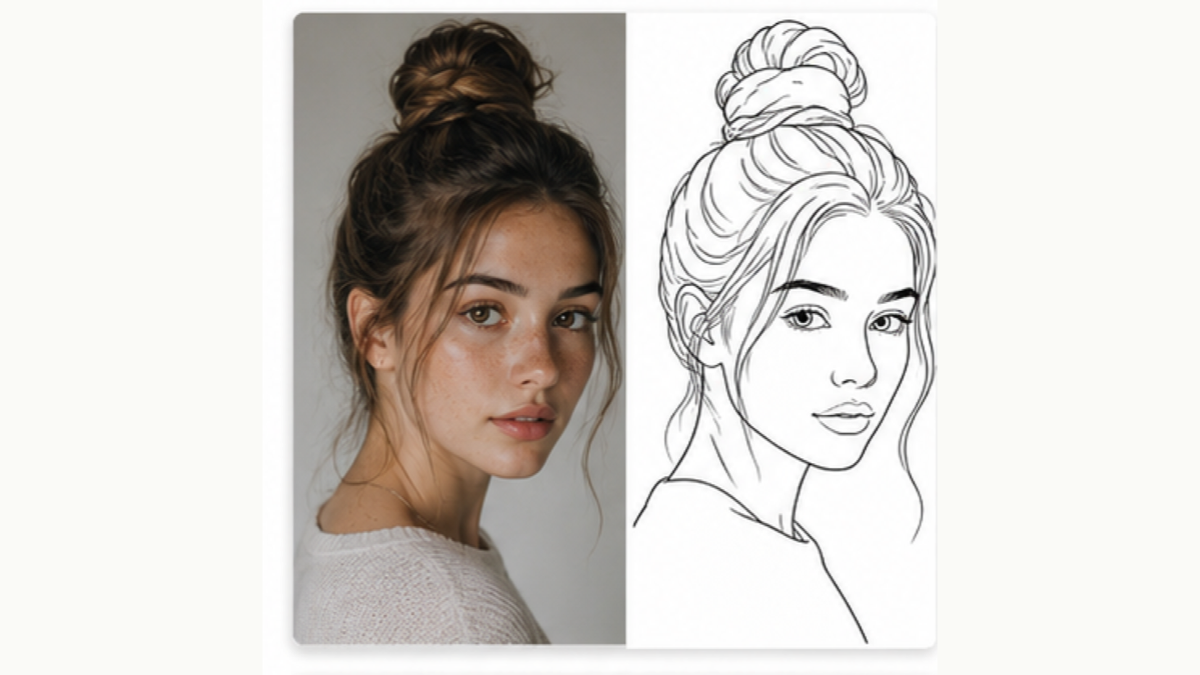
Line art is a drawing style that relies exclusively on lines to create an image, with minimal or no shading, hatching, or tonal variation. In pure line art, the entire composition is built from lines of varying widths, lengths, and directions. There is typically no fill, no gradient, and minimal attention to three-dimensional form through traditional shading techniques.

Characteristics of Line Art

  • Precise and intentional: Every line in line art has a specific purpose and meaning. Nothing is left to chance or implied.
  • High contrast: Line art typically features strong contrast between the black lines and the white (or colored) background.
  • Clean and defined: Lines are typically clean, crisp, and well-defined. Rough or sketchy marks are minimized.
  • Focus on outline and contour: Line art emphasizes the edges and outlines of objects, creating a flat, often graphic quality.
  • Minimal or no toning: While some line art may include subtle shading, the primary method of creating form is through line placement and density.
  • Scalability: Because line art relies on clean lines rather than tonal values, it scales beautifully from small to large sizes without losing quality.

When to Use Line Art

Line art is ideal for specific projects and artistic goals:

  • Logos and branding: The clean, scalable nature of line art makes it perfect for logos and brand marks.
  • Illustrations for children's books: The clear, simple visual language of line art is excellent for young audiences.
  • Technical or architectural drawings: Line art's precision makes it ideal for technical illustrations and blueprints.
  • Tattoo design: Line art translates exceptionally well to tattoos, where clarity and simplicity are essential.
  • Digital design and graphics: Web design, icon design, and digital graphics often benefit from line art's clean aesthetic.
  • Fine art printmaking: Etching, engraving, and woodcut arts traditionally use line-based imagery.

What is a Sketch?

A sketch is a preliminary or rough drawing that captures the essential elements of a subject with quick, loose marks. Unlike line art, sketches are often exploratory in nature, meant to capture ideas, proportions, and basic forms quickly rather than create a finished product. Sketches frequently include multiple lines, erased areas, corrections, and a sense of immediacy and spontaneity.

Characteristics of Sketch

  • Quick and gestural: Sketches are typically drawn quickly to capture ideas and forms rather than create finished work.
  • Loose and expressive: Sketches often feature loose, expressive linework rather than clean, precise lines.
  • Multiple layers of lines: Sketches frequently have overlapping lines, corrections, and adjustments visible in the final piece.
  • Varying line weight: Lines in sketches often vary naturally based on hand movement and pressure.
  • Emphasis on form and proportion: Rather than focusing solely on outline, sketches often explore light, shadow, and three-dimensional form.
  • Often incomplete: Sketches may have unfinished areas, areas left blank, or areas that are only suggested rather than fully rendered.
  • Personal and immediate: Sketches often feel personal, spontaneous, and direct—a window into the artist's thinking process.

When to Use Sketch

Sketches serve different purposes than finished line art:

  • Preliminary planning: Sketches are invaluable for working out composition, proportions, and ideas before committing to a finished piece.
  • Concept development: Rough sketches help explore multiple variations and ideas quickly.
  • Life drawing and figure studies: Quick sketches are essential for capturing dynamic poses and understanding human anatomy.
  • Fine art and expressive work: Many finished artworks maintain a sketchy quality to convey emotion and immediacy.
  • Portfolio pieces: Sketches can stand alone as finished portfolio pieces, demonstrating skill and understanding.
  • Artistic exploration: Sketches are perfect for experimenting with new techniques, styles, or subjects without pressure.

Key Differences Between Line Art and Sketch

While both line art and sketch use lines as their primary medium, they differ in several important ways:

AspectLine ArtSketch
PurposeFinished artwork or design assetPreliminary or exploratory study
Line qualityClean, precise, intentionalLoose, gestural, expressive
CompletenessFinished and polishedOften unfinished or partial
Line visibilitySingle clear line per elementMultiple overlapping lines common
Tone and shadingMinimal to noneOften includes tonal variation
Time to createOften lengthy and deliberateQuick and spontaneous
Final appearancePolished, professional, graphicSpontaneous, expressive, personal

When to Use Each Style

Choose Line Art When:

  • You need a finished, professional-looking artwork or design
  • Scalability and reproduction are important (logos, icons, prints)
  • You're working on technical or architectural documentation
  • Creating designs for tattoos, embroidery, or other precise mediums
  • The subject requires clarity, precision, and visual impact
  • You're creating graphics for digital or print media that need crisp edges

Choose Sketch When:

  • Working through ideas and exploring compositions
  • Developing a concept before committing to a finished piece
  • Creating figure studies or anatomy studies
  • You want to convey spontaneity, energy, or emotion
  • Testing a new technique or artistic approach
  • Creating portfolio pieces that showcase your understanding of form and proportion

How to Convert Photos to Line Art

Converting a photograph to line art is an excellent way to understand the principles of line art while creating stunning artwork. The process involves identifying the key outlines and edges in your photo, then translating them into clean, purposeful lines.

With traditional methods, you would print your photo and manually trace the outlines, or study the photo carefully while drawing the line art by hand. This develops your observational skills but is time-consuming.

PhotoGrid.space's photo to line art tool streamlines this process, automatically converting your photograph into clean line art while preserving the essential features and details of your subject. The tool intelligently identifies edges and creates crisp, graphic line artwork from any photo. This is perfect for:

  • Creating reference material for your own hand-drawn line art
  • Rapidly prototyping tattoo designs
  • Generating line art illustrations for books and digital media
  • Creating graphic design assets quickly
  • Understanding how to simplify complex subjects into their essential lines

How to Convert Photos to Sketches

Converting a photo to a sketch is particularly useful for creating expressive artworks that maintain the energy and immediacy of a sketch while being based on photographic reference. A good photo-to-sketch conversion captures the essential forms and values of your subject while creating that characteristic sketchy, gestural quality.

Traditionally, you might spend hours sketching from a photo, building up forms with multiple lines and gradually refining your study. With PhotoGrid.space's photo to sketch tool, you can convert any photo into a sketch in seconds. The tool analyzes your image and creates sketch-like artwork that:

  • Captures the essential forms and proportions of your subject
  • Creates the loose, expressive linework characteristic of sketches
  • Includes tonal variation to show depth and form
  • Produces artwork that looks hand-drawn rather than photorealistic
  • Provides excellent reference material for your own artistic studies

This is invaluable for artists who want to use photos as reference while maintaining an expressive, hand-drawn quality in their final work.

Tips for Beginners

If You're Learning Line Art:

  • Start with simple subjects: Begin with objects that have clear, simple outlines (fruit, basic objects, simple animals).
  • Use tracing paper: Tracing can help you understand how to simplify complex subjects into essential lines.
  • Pay attention to line weight: Varying the thickness of your lines creates visual interest and guides the viewer's eye.
  • Practice negative space: Sometimes the space around an object is as important as the object itself in line art.
  • Use reference images: Convert photos to line art using tools to understand what information is essential vs. what can be eliminated.
  • Commit to your lines: Once you place a line in line art, it's usually there. This encourages thoughtful, intentional drawing.

If You're Learning to Sketch:

  • Embrace the loose approach: Sketching is about capturing essence, not perfection. Allow yourself to make multiple lines and corrections.
  • Practice gesture drawing: Quick 1-5 minute sketches help you capture movement and form without overthinking.
  • Vary your mark-making: Use different line weights, hatching, and marks to create visual variety and suggest form.
  • Don't erase too much: Let your sketching process show—the layers of lines tell a story of how you arrived at your image.
  • Study from life: Sketching from real subjects (people, objects, landscapes) develops observational skills faster than working from photos.
  • Use sketches to study: Create multiple sketches exploring the same subject from different angles or in different styles.

For Both Styles:

  • Draw regularly: Daily practice, even for 15-30 minutes, develops skill and confidence faster than occasional long sessions.
  • Study artists you admire: Analyze how your favorite artists create their line art or sketches to understand their techniques.
  • Use digital tools strategically: Tools like PhotoGrid.space can provide reference material and inspiration, but hand-drawing is essential for skill development.
  • Understand your subject: The more you understand the subject you're drawing (anatomy, perspective, structure), the better your work will be.
  • Step back and evaluate: Regularly step back from your work to see the overall composition and proportions.

Combining Line Art and Sketch in Your Practice

Many successful artists use both styles as complementary techniques rather than mutually exclusive approaches. A common workflow might be:

  1. Start with quick sketches to explore composition and ideas
  2. Refine promising sketches with more detailed studies
  3. Create a final line art version for a polished, finished piece
  4. Or, maintain the sketchy quality in the finished work to retain its energy and expressiveness

Understanding both styles gives you flexibility in your artistic practice and allows you to choose the approach that best serves your artistic vision and project goals.

Conclusion

The distinction between line art and sketch is fundamental to understanding different approaches to drawing and artistic creation. Line art offers precision, scalability, and a polished aesthetic, making it ideal for finished work, design assets, and technical applications. Sketches offer spontaneity, expressiveness, and serve as essential tools for exploration and study.

Rather than viewing these as competing styles, consider them as complementary techniques in your artistic toolkit. Understanding when and how to use each style will expand your artistic capabilities and help you create work that effectively communicates your vision.

Whether you're converting a photograph to line art or sketching from a reference photo, tools like PhotoGrid.space can accelerate your artistic process while helping you understand these fundamental techniques. Ready to explore both styles? Try converting a photo to line art and a sketch to see how these different approaches transform the same image.

Related Articles

Line Art Basics Illustration
Techniques

Mastering Line Art: Clean Lines and Bold Graphics

Explore advanced line art techniques to create professional, scalable artwork that works beautifully at any size.

Sketch Foundations Illustration
Techniques

The Art of Expressive Sketching: Capturing Energy and Form

Learn how to create dynamic, expressive sketches that capture the essence of your subject with minimal lines.

Ready to Try Both Styles?

Convert your own photos to line art or sketches with PhotoGrid.space. Explore both styles and discover which resonates with your artistic vision.